


There’s no denying Batman is DC Comics’ top-selling property. A quick overview of the top 50 selling comics every month consistently places him in the top 10 best sellers. This pattern remains consistent regardless of whether it’s the main DC Universe or DC’s Absolute Universe. Given that Batman is DC’s biggest cash cow, it’s not at all surprising that the Dark Knight has a strong and passionate fan following or that fans have divisive opinions over his status quo. It’s also true that Batman’s high profitability makes the publisher reluctant to significantly change his status quo.
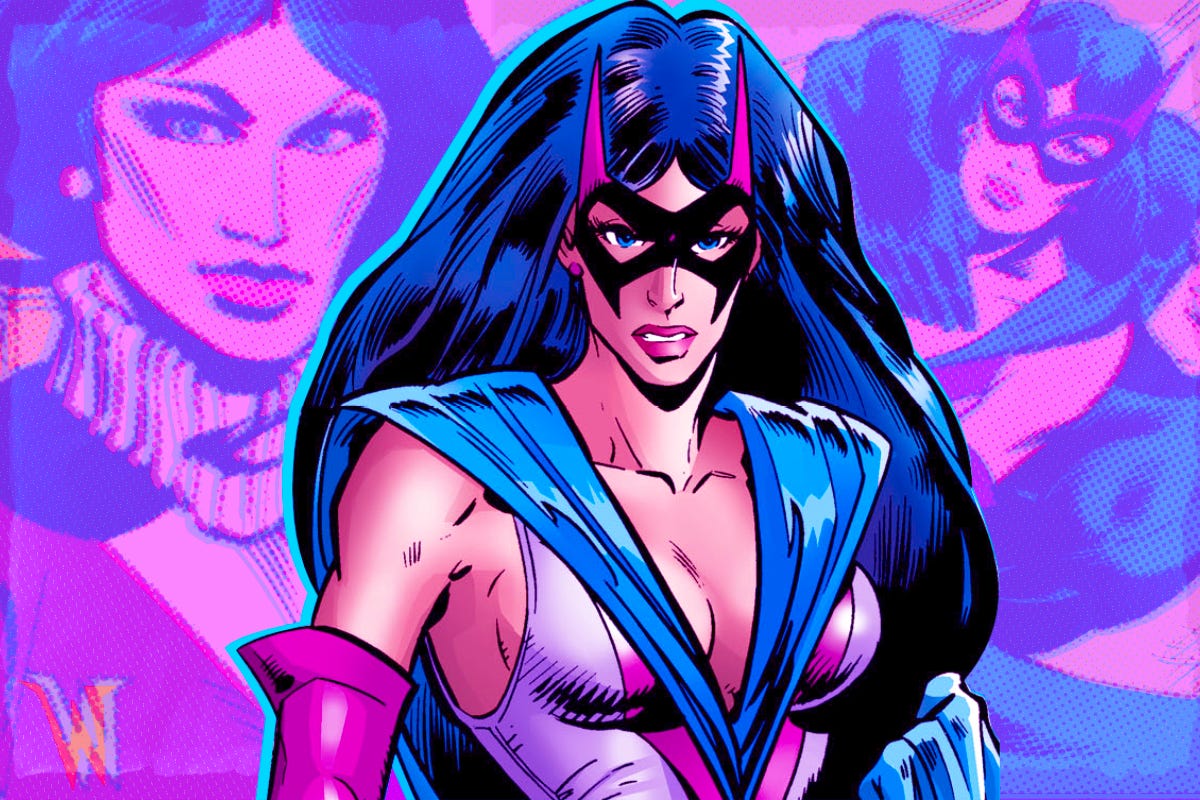
One character that is often caught in the crossfire of Batman’s iconic status quo is the original Huntress herself, Helena Wayne. That entirely boils down to one of her greatest assets as a character (being the daughter of Batman and Catwoman) also being her most frustrating curse – a problem that was exacerbated by her death and erasure in 1985’s Crisis on Infinite Earths. Since then, Helena Wayne was reworked with a mafia origin (as Helena Bertinelli) to keep her active without changing Batman’s iconic status quo, and this is who she’s been for most of her near-50-year-old history.
Whilst Helena Wayne’s death and erasure from 40 years ago remain a major source of grievance for her immediate fans to this day, it also can’t be denied that DC Comics has attempted to restore some version of the character as part of its main post-Crisis canon in the last 20 years. The problem, however, is that DC has consistently used the wrong approach to restore her instead of going with the more obvious solution of resurrecting the original character and picking up her story where it left off.

If anything, exploring how the original Huntress confronts the trauma of death, resurrection and erasure, and how she chooses to rebuild her life under those circumstances would create a stronger emotional hook. It would also result in a far more impactful story than any attempt to reboot Helena Wayne with a new origin. So why hasn’t DC gone this route? It seems like a simple enough solution to restoring Helena Wayne back into the main DC canon, especially since it would keep her original history intact and would not alter the post-Crisis Batman in any way.
The answer seems to be that today’s DC Comics editors and creators are simply out of touch with who the character is due to the long passage of time and because Helena Bertinelli has functionally taken her place in the main DC canon. What may be needed is a reminder of what made Helena Wayne a breakout character the first time in order to figure out a path forward.
Far from being the Huntress who happens to have Batman and Catwoman for parents, Helena Wayne did a lot more to carve a unique core mythology for herself that deserves far more recognition and respect. Even more so since her larger contribution to DC lore is much more significant than what is currently acknowledged.
Helena Wayne Owns Her Own Heroic Legacy as The Huntress and as a Lawyer
Of course, there’s no pretending that being the daughter of Batman and Catwoman isn’t an important part of who Helena Wayne is. It also needs saying that she’s not an accessory to her parents’ romance. This is, perhaps, the biggest misconception that has gained traction in the last 10 years. Even more so with recent stories like Batman/Catwoman by Tom King and Clay Mann presenting Helena as a future Batwoman who is essentially a female version of her father. Tom Taylor’s and Nicola Scott’s more recent Detective Comics Annual #1 (2026) also presents Helena as Bruce and Selina’s bundle of joy if Bruce got to have the family life he always wanted.
Even with the new canonical versions of Helena Wayne that have appeared within the last two decades, she’s still had storylines that primarily centred on her relationship with her parents. For example, the New 52 version of Helena Wayne was presented as her parents’ Robin who was forced to adapt a new identity as the Huntress on Earth-0. Her story ended with her deciding to become Earth-2’s Batman. The more recent version of Helena Wayne that appeared in Geoff Johns’ and Mikel Janín’s Justice Society of America was conceptualised as the possible future daughter of Batman and Catwoman, but her reach as a character didn’t get any traction beyond that.
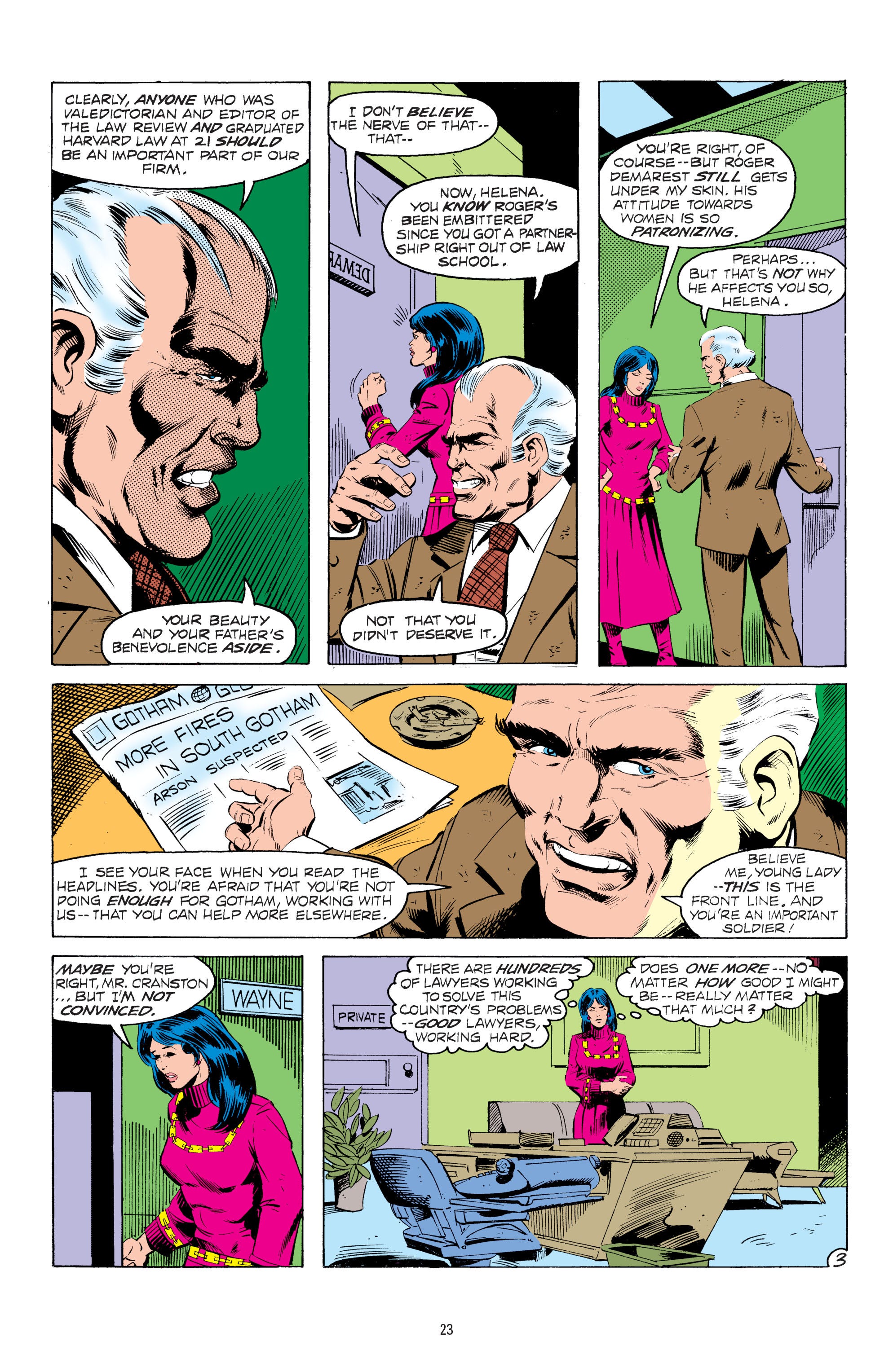
Since the future Huntress’ impact on the JSA was ultimately inconsequential, her departure from the book after Jeff Lemire and Diego Olortegui took over wasn’t strongly felt, if at all. This is significantly different from the pre-Crisis Huntress, who did leave a long-lasting impression on the JSA to the point where – to this day – she is still recognised as an iconic member of the team. So what did Huntress creators Paul Levitz, Joe Staton and Bob Layton do right the first time that made Helena Wayne a standout character? Mr Levitz said it best in DC Super-Stars #17 in 1977:
“[The Huntress] is hardly an update of Batgirl, and as her future exploits will clearly show, she’s more than just the daughter of Batman. She’s an individual in her own right, and perhaps the deadliest woman crimefighter yet imagined.”
In execution, this meant framing Helena’s relationship with her parents to benefit her instead of the other way around. Instead of framing the Huntress’ story on “What if Batman and Catwoman got married and made a baby?” Levitz and co framed her story on the question of “What would an adult daughter of Batman and Catwoman do with the tools she’s been gifted with?” The answer to that took two paths: who Helena Wayne became as Gotham’s newest caped crusader and Justice Society hero, and who she became as a public interest lawyer who specialises in consumer law.
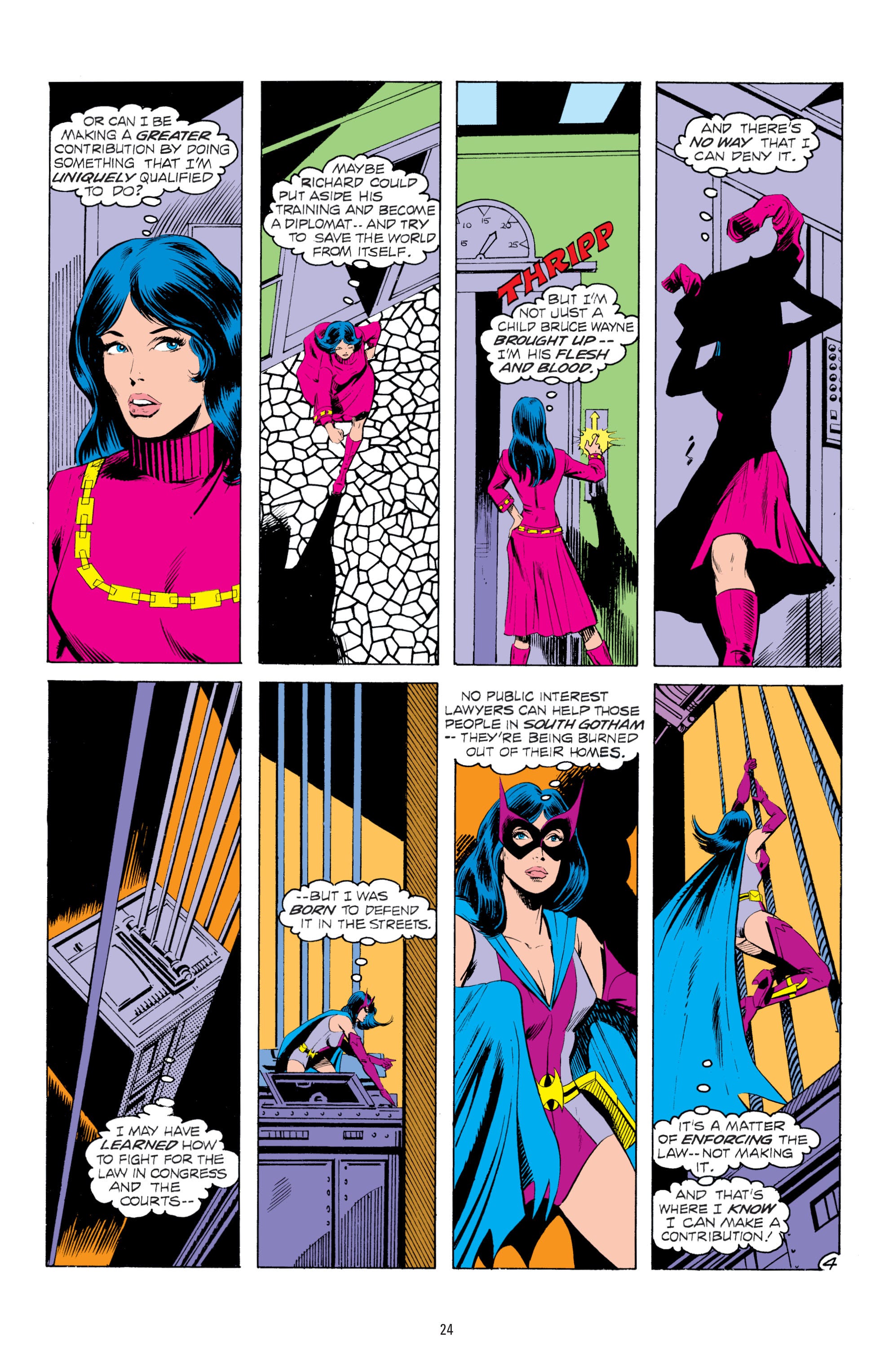
Before becoming the Huntress, young Helena Wayne already knew she wanted to honour her father’s rich legacy as a pursuer of justice on her own terms. As a late teen, this took the form of her going to law school at Harvard University (later retconned to Yale in Infinity, Inc. #7) and graduating valedictorian with her Juris Doctor at age 21 – an age when most people would be graduating from university as undergrads. She then became a junior partner at the Cranston, Grayson & Wayne law firm, where she represented clients who have been harmed by institutions.
Helena Wayne being a public interest lawyer is highly significant since it says something about how she feels the law should work. At its core, public interest law is about enforcing the rule of law (as in not “bending” it to serve the interests of the rich and powerful) and protecting the rights of disenfranchised individuals who have been harmed by government institutions, corporations and even banks. Public interest lawyers cover a wide range of issues that include social justice, immigration rights, criminal defence, workplace discrimination, disability rights, housing disputes, and consumer rights, among many others. Public interest lawyers are active in both litigation and advocating for legislation that better protects people’s rights.
Of course, since the world is not a just place, and people in positions of power always find ways to bend the rule of law to their favour, Helena Wayne quickly learnt the limitations of the legal profession in her earlier stories. Aside from experiencing workplace sexism, she also felt she didn’t stand out amongst other highly skilled lawyers. She even expressed frustration at one point over how a judge ruled in favour of a drug dealer she busted. When Helena Wayne worked alongside her romantic partner at the District Attorney’s office, he too attempted to control her access to high-profile cases to keep her from pursuing those cases as the Huntress.
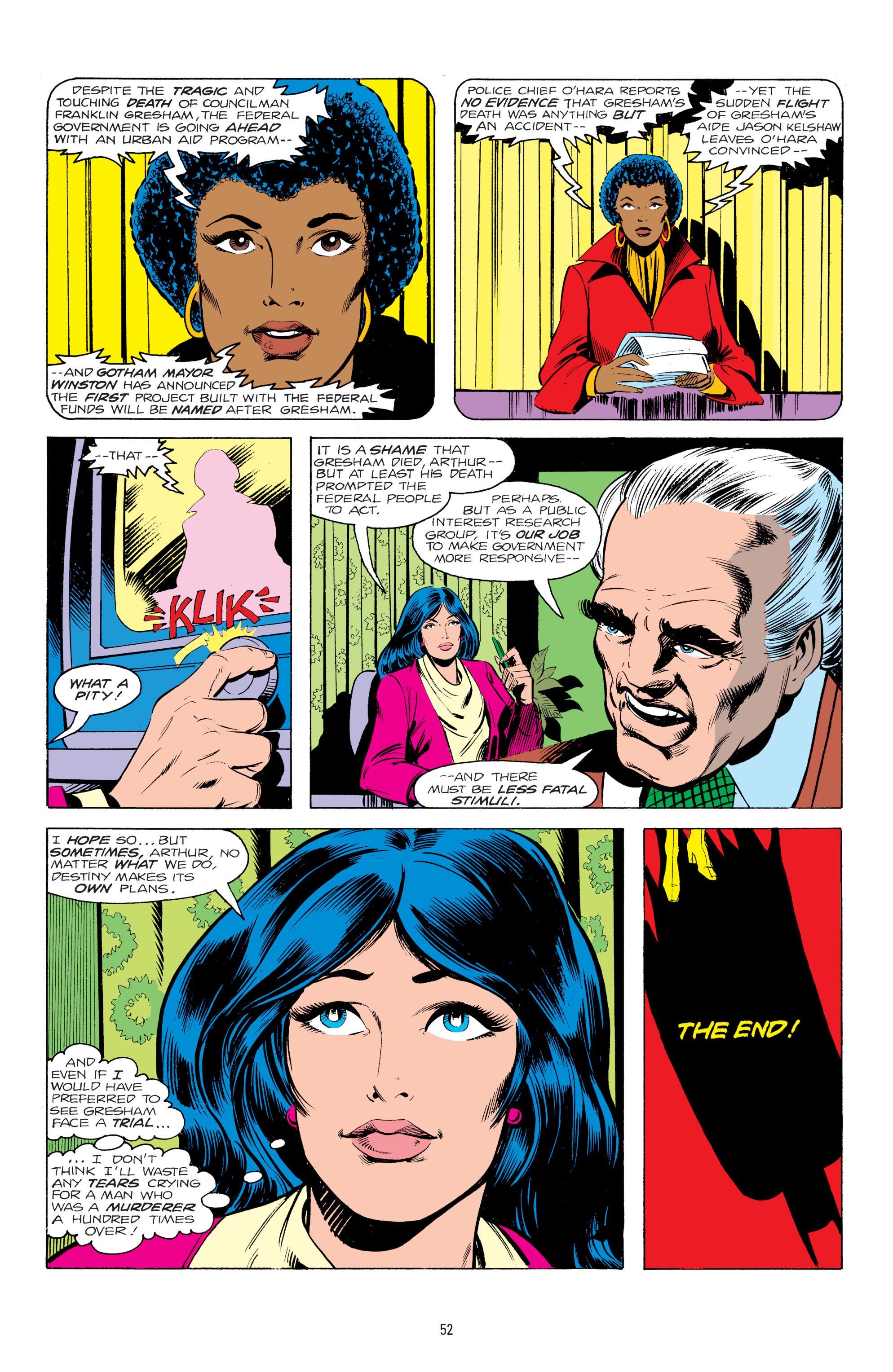
Between Helena Wayne’s passion for pursuing justice and the limitations of working in a male-dominated profession like law, she realised where she could be most impactful, and that was fighting crime as the Huntress. This was what ultimately got her to keep suiting up as the Huntress beyond seeking justice for both of her parents when their former lives as Batman and Catwoman caught up with them in the end.
Not only was Helena able to enforce the law more freely as the Huntress, but this also allowed her to maximise the other skills she couldn’t exercise in the courtroom, like breaking into the homes of crime bosses with maximum security to access the evidence she needs to pursue a case. (A skill she no doubt learnt from her mother.) As the Huntress, she’s also able to do her own forensic analysis of the evidence she collects and bust criminals (including white-collar criminals) that way.
Helena Wayne being a lawyer by day and the Huntress by night is how she forges her heroic legacy in a way that sets her apart from both of her parents. Both aspects of her life also present unique challenges for Helena that can’t be replicated with Helena Bertinelli or any future daughter of Earth-0’s Batman and Catwoman. In fact, those unique challenges are the other thing that’s missing from Helena Wayne post-Crisis.
Helena Wayne’s Internal Conflicts Rarely Deal With Her Relationship With Her Parents
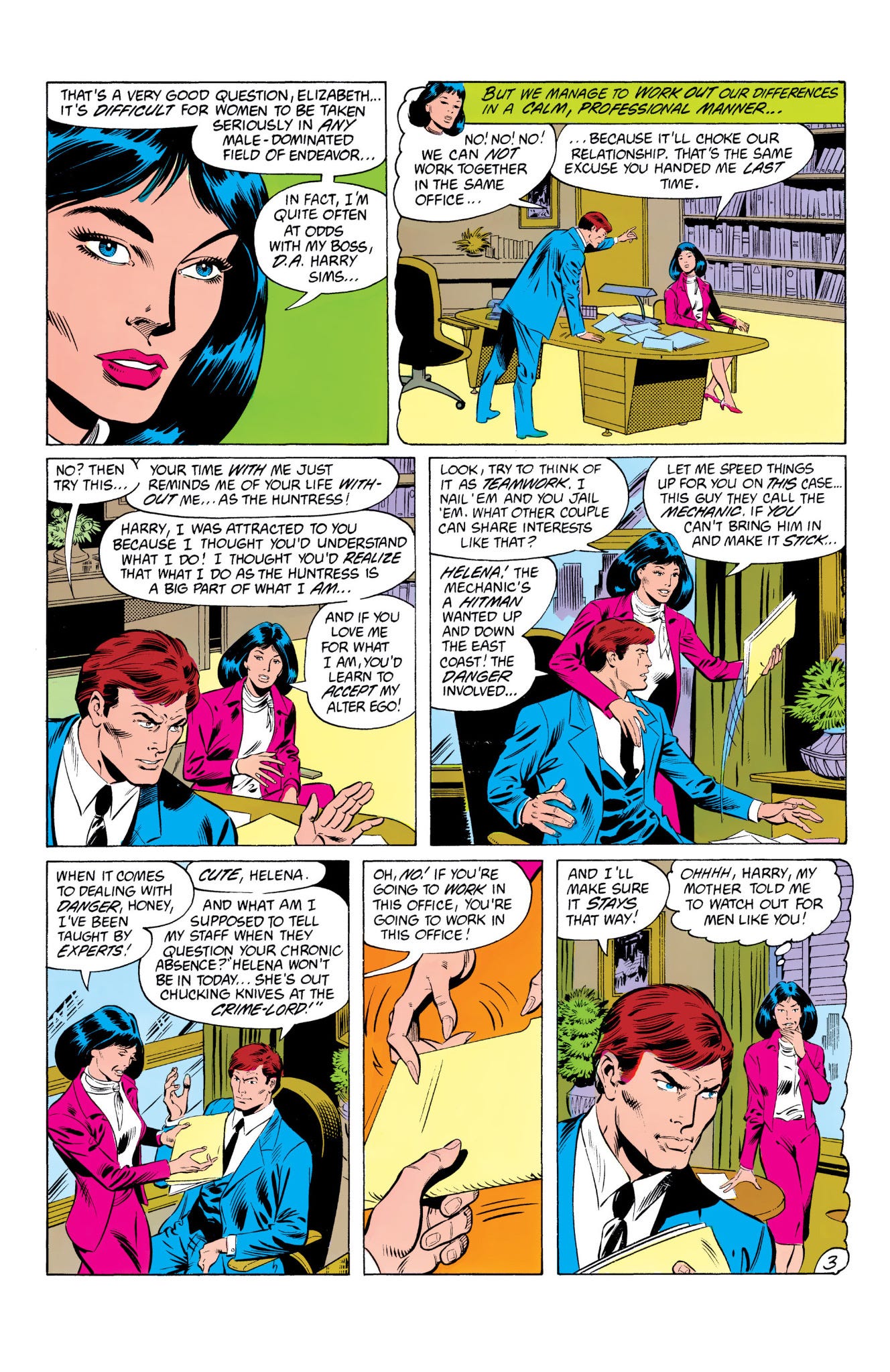
As mentioned earlier, Helena Wayne experienced workplace sexism, both at her public interest law firm and at the District Attorney’s office. The latter problem was exacerbated by her romantic partner, District Attorney Harry Sims, being aware of her Huntress alter ego and hating the fact that she pursued vigilante justice whilst actively practising law. But rather than being concerned about the illegality of Helena carrying out vigilante justice as a practising lawyer (an action that could easily disbar her), he was far more concerned about the danger she routinely exposed herself to.
The implication here was that the violence involved in vigilantism was inappropriate for a woman and better suited for a man. The other problem Harry had with Helena’s Huntress lifestyle was that it made him feel inadequate as a man. If she could take on more dangerous criminals like the Thinker, the Joker, Lion-Mane, and the Crime Lord (four villains Harry was powerless against), then she wouldn’t really have much need for him. Since she often found herself rescuing Harry as the Huntress, Helena was effectively “the man” in their relationship. This later saw Harry attempt to regain control of his relationship with Helena by controlling her access to his office’s criminal files. This, of course, did not work on Helena since she worked around him.
Though it was obvious Helena wanted an egalitarian relationship with someone who shared her values and passion for justice, she also started realising there wasn’t much of a future she could build with Harry. She therefore started withdrawing from her relationship once she started recognising Harry’s misogynistic behaviour for what it was. But her fight against misogyny and sexism didn’t end there. Even as the Huntress, she fought criminals who didn’t take her seriously as a threat, like the Mechanic and the Undertaker. She was also routinely taken out by the Undertaker’s henchman, Milo, most notably in her own Arkham Asylum arc in Wonder Woman #301 through Wonder Woman #308.
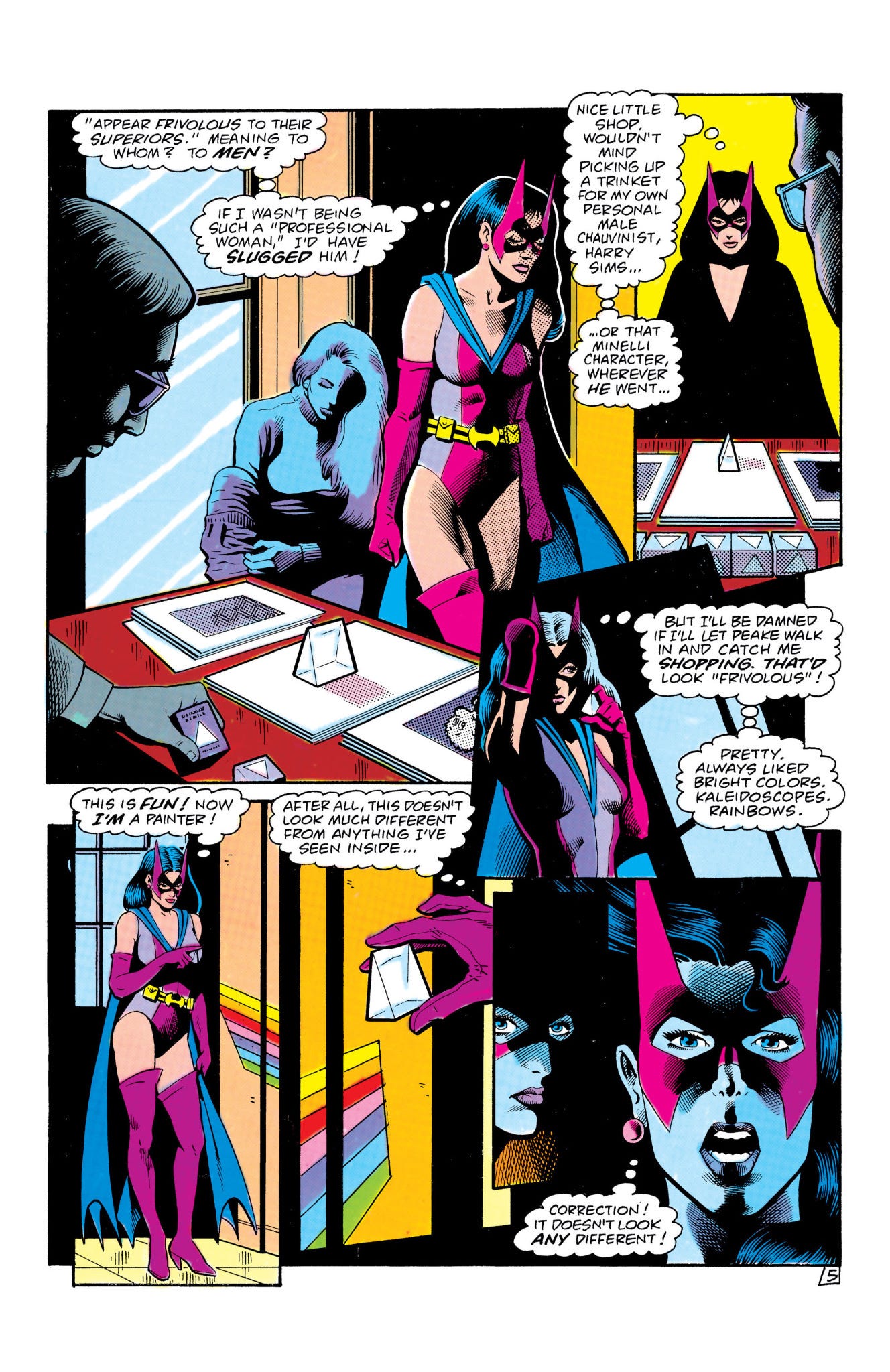
Between Harry undermining her competence as a crimefighter and emotionally abusing her, and male criminals consistently disrespecting her, Helena did get herself to a point where she started increasing her use of violence in order to be taken seriously. But this also exposed another problem Helena experienced in both of her identities: could she really be the Huntress and still be a normal civilian leading an ordinary life? This question was really at the heart of most of Helena Wayne’s internal conflicts because she really wanted to have it both ways. This was the biggest way her upbringing as Bruce and Selina’s daughter impacted her adult life.
Helena got to experience firsthand what an emotionally healthy life looked like. As a child, she was raised by a Bruce Wayne and Selina Kyle who no longer needed Batman and Catwoman in their lives. They enjoyed a happy marriage until death did them apart. Helena understandably wanted the same thing for herself but didn’t want to sacrifice her Huntress life to have that. This was where things consistently fell apart for Helena, and she quickly learnt how isolating being the Huntress really was.
This frustration also added to her increased use of violence during her Huntress exploits, to the point where she started to question if this was what it felt like for her mother to be Catwoman. She then started to worry that if she took things too far, she would be tempted to follow in her mother’s footsteps. After all, Selina did become Catwoman as a way of reclaiming power for herself. For Selina in the 1940s and 1950s, being Catwoman wasn’t just about pushing back against sexism, but it was also about giving the middle finger to a world that had treated her so abysmally.
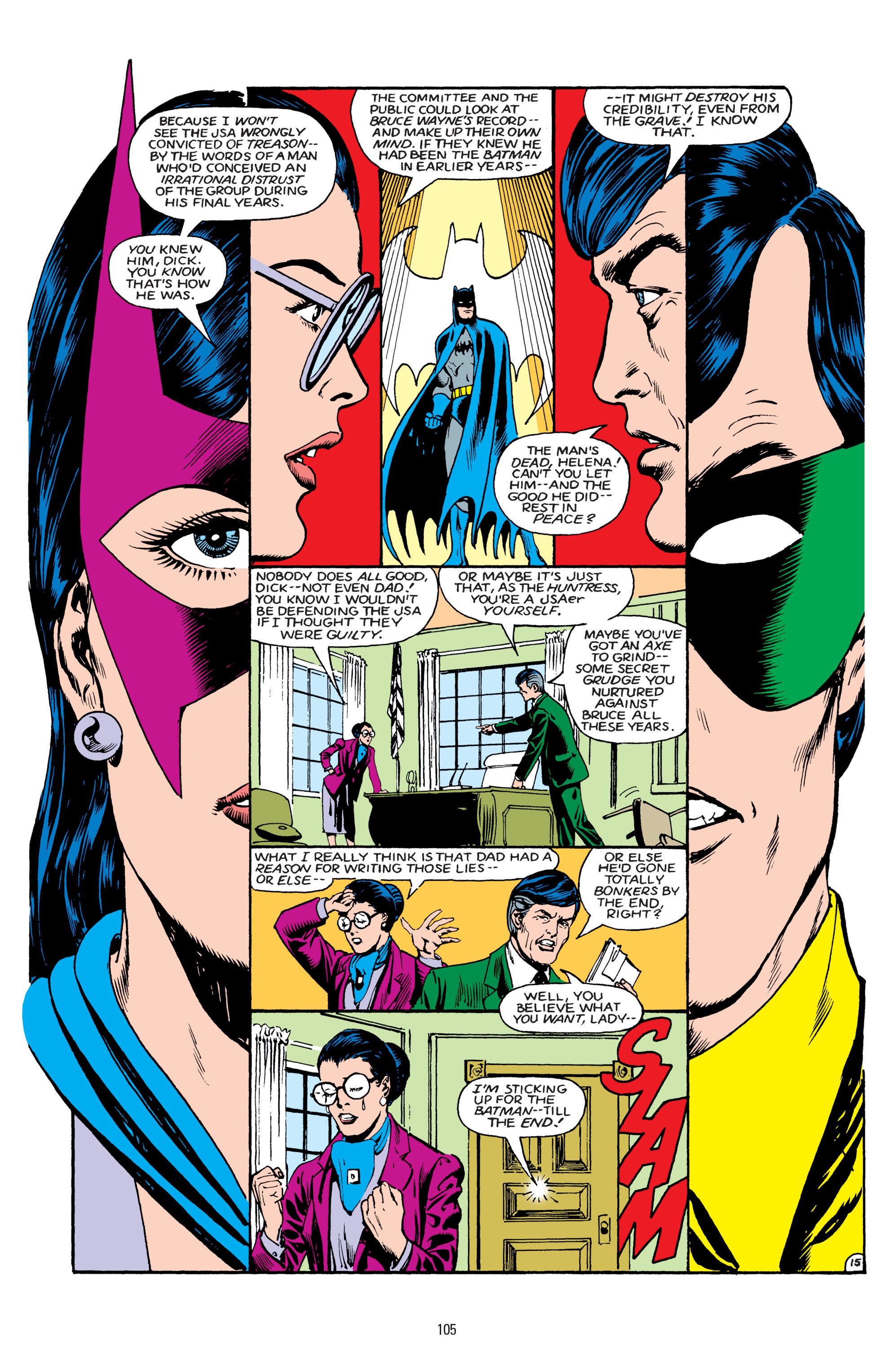
The other way that Helena struggled to balance both sides of her life was when she took on cases as a lawyer that intersected with her life as the Huntress. This was most notably what happened during the events of America vs. the Justice Society, in which she served as the team’s defence lawyer whilst being an active member of the team. To hide this major conflict of interest, Helena could not appear in the JSA’s senate hearing as the Huntress. In fact, Power Girl had to come up with a reason she couldn’t show up to testify on their behalf.
The other problem that Helena ran into with the JSA senate hearing was having to prove her own father was lying in a diary he wrote prior to his death that accused the JSA of war crimes during World War II. Not only was she fighting against Dick Grayson, who was serving on the senate committee, but she also had to tread a very careful line between revealing her father’s true intentions with the diary without exposing the fact he was Batman and that she and Dick were Huntress and Robin.
On the whole, Helena Wayne’s internal conflicts rarely involved her parents, and they all centred on her inability to evenly split her life between being a lawyer and the Huntress. The few times that her internal conflicts did involve her parents, they were always tied directly to what Helena wanted in her own adult life, and they rarely centred on how she felt about her parents or their costumed legacy. This, again, cannot be recaptured with Bertinelli or a future Huntress and still be impactful.
Helena Wayne’s Biggest Contribution to DC Lore Is Normalising Superheroes Having Children
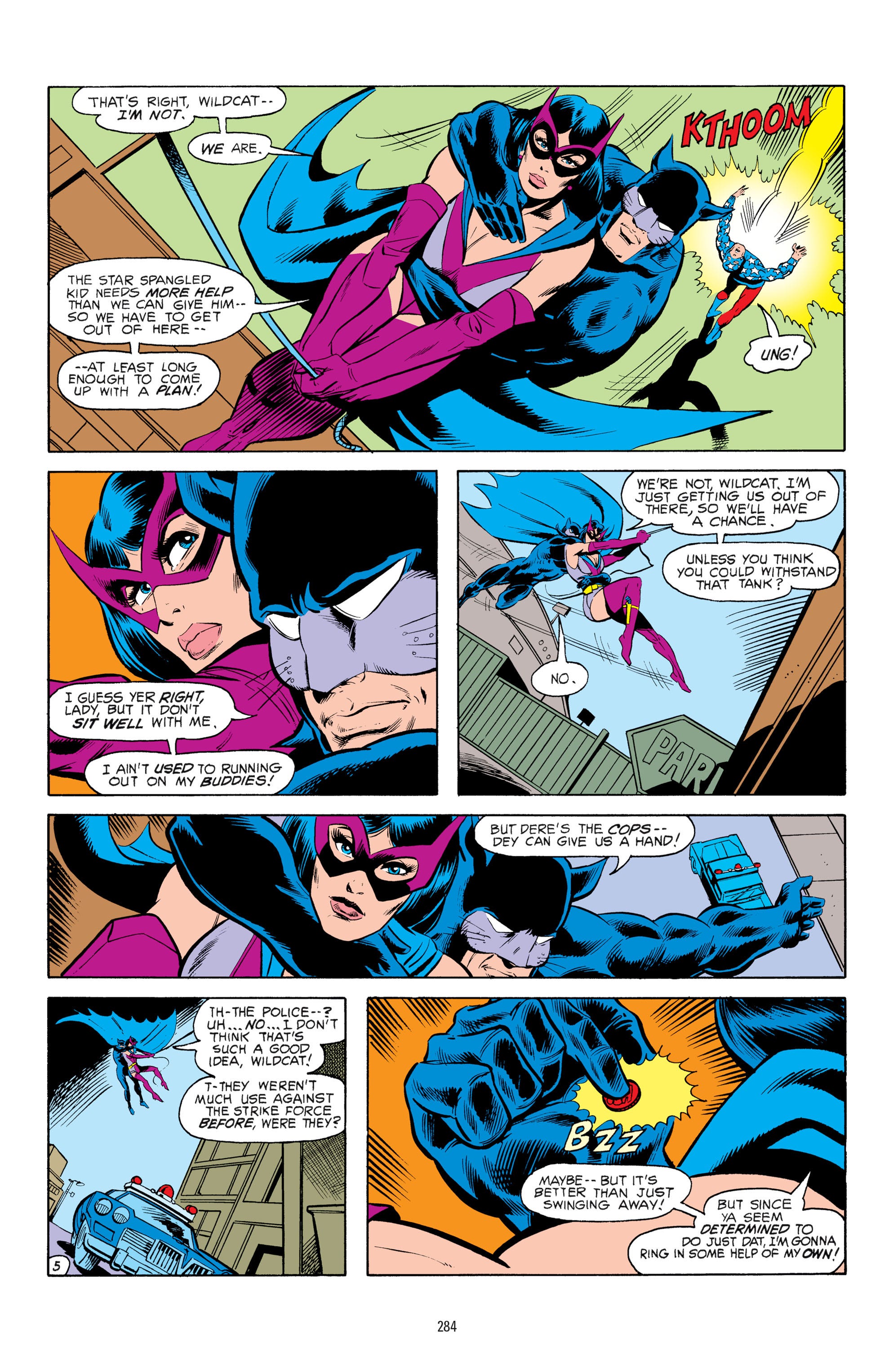
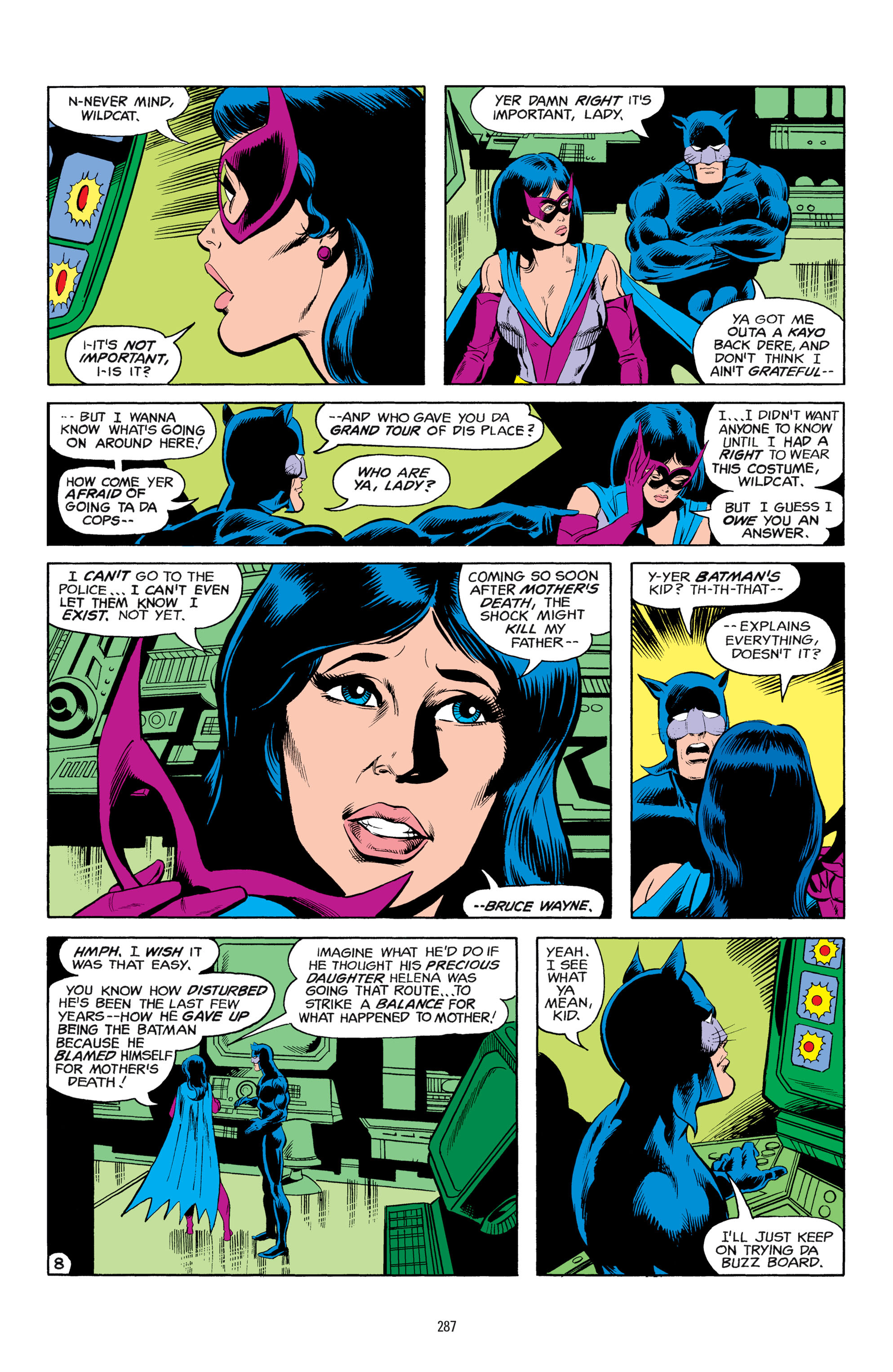
On the topic of Helena Wayne’s larger impact, this gets us to her true contribution to DC lore, and that is normalising DC’s iconic heroes having children. Because Helena Wayne was the first canonical daughter Batman ever had, this is the reason most of the JSA now have children of their own and why even the post-Crisis Batman has had a canonical son for the past 20 years. Because Helena Wayne started this trend, her pre-Crisis history can never be replaced, and reinterpreting her as a possible future daughter of the post-Crisis Batman and Catwoman robs her of her true legacy.
Before Helena Wayne entered the picture in 1977, the JSA’s generational legacy was confined to Robin, Power Girl, and the Star-Spangled Kid. They were Batman’s sidekick, Superman’s cousin, and a 1940s hero displaced in the 1970s, respectively. On Earth-1, the heroes’ sidekicks included Roy Harper (though he too had an Earth-2 counterpart), Donna Troy and Wally West, who worked alongside Green Arrow, Wonder Woman, and Barry Allen’s Flash, respectively.
Had Helena Wayne not entered the scene, it’s likely that the heroes’ sidekicks would have been the extent of DC’s generational legacy for decades to come. But Helena Wayne changed that status quo in 1977, and she paved the way for more such heroes to exist, leading to the formation of Infinity, Inc. in 1984. This team introduced Hippolyta “Lyta” Trevor as the daughter of Wonder Woman and Steve Trevor. This same team also gave Hawkman and Hawkgirl a son in the form of Hector Hall. Helena Wayne being a game changer is what allowed Alan Scott and Rose Canton to have twin children, Jade and Obsidian, with the latter being gay.
Though the JSA’s legacy went on to include other generational heroes who weren’t the children of DC’s existing heroes like Yolanda Montez, Beth Chapel, Albert Rothstein and Norda Cantrell, the fact is many more did. Post-Crisis, Jack Knight was created as the son of the original Starman, Ted Knight. He was later succeeded by Courtney Whitmore as Stargirl, and she is the stepdaughter of Stripesy, the Star Spangled-Kid’s sidekick.
The idea of generational legacy even expanded beyond the Justice Society, with other superheroes also having children. Black Lightning is one such character, who has two daughters with superhero identities of their own, Thunder and Lightning. Even Superman and Lois Lane now have a son who has been in continuity for 11 years, Jon Kent. He has been both Superboy, Superman, and now Tomorrow Man. Jon Kent is also best friends with Batman’s son, Damian Wayne, effectively following in the footsteps of Helena Wayne’s Huntress and Power Girl, who were also best friends. The post-Crisis Wonder Woman even has a daughter of her own now, called Elizabeth Marston Prince, and Jay Garrick recently got a daughter called the Boom.
Given how much the idea of generational legacy has expanded in the last 50 years, Helena Wayne’s contribution to DC lore is neither small nor insignificant. More than anything, all of these characters owe a debt to Helena Wayne, and DC needs to start recognising that instead of finding new ways to erase it. By continuing to erase Helena Wayne as the original Huntress and as the original daughter of Batman, DC is sending a troubling message about how women are valued at the company. Even more so since Batman’s son has not been subjected to erasure the way Helena has.
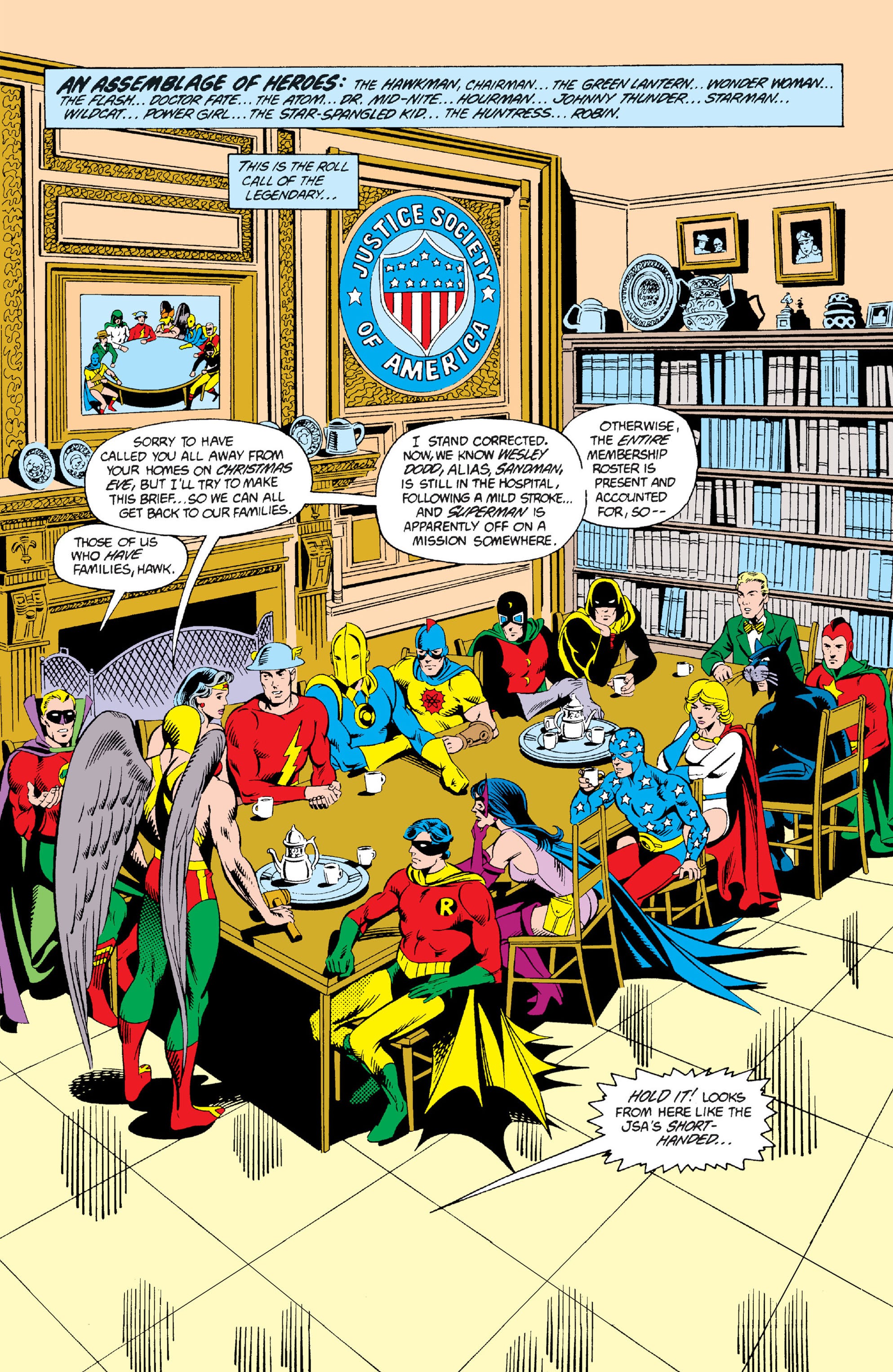
The good news for DC is that it’s not too late to course correct that. They now have a Helena Wayne floating around in temporal limbo without narrative direction. All they need to do here is restore what was lost: her iconic pre-Crisis history. That can be very easily achieved with an Infinite Crisis-style retcon like what was done with Power Girl 20 years ago. Restoring Helena Wayne’s pre-Crisis history will not only restore her rightful place in both JSA lore and the larger DC canon, but it will finally get the character back on track in terms of story potential in the main DCU present.
Helena Wayne doesn’t need to be the daughter of the post-Crisis Batman and Catwoman. She needs to be the original Huntress, the daughter of the Golden Age Batman and Catwoman, a second-generation JSA hero and cofounder of Infinity, Inc.